Discover Ancient Town Hoi An: World Cultural Heritage in Quang Nam – Da Nang
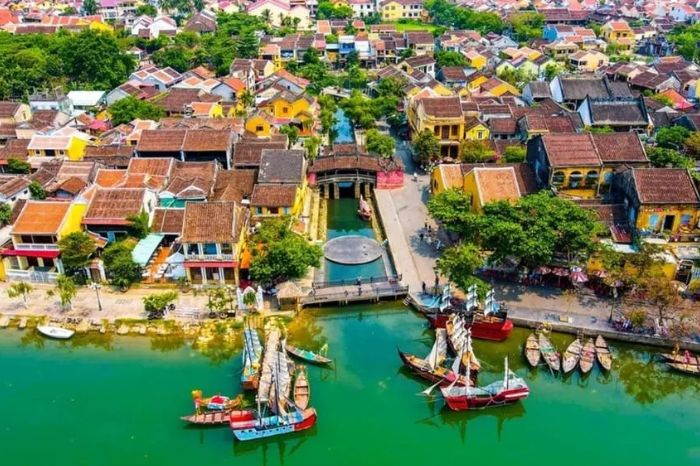
Ancient Town Hoi An is one of the most prominent tourist destinations in Vietnam, located in Quang Nam province, near Da Nang. It was recognized by UNESCO as a World Cultural Heritage site in 1999 due to its ancient architecture and vibrant trading port history from the 16th-17th centuries. Visitors can explore old houses, the iconic Japanese Bridge, and experience local culture through cuisine and festivals. This article will guide you in-depth about its history, attractions, and how to combine with the Da Nang – Ngu Hanh Son – Hoi An – Ba Na – Hue 4N3D tour. My Tam Travel provides reliable information to help you plan a meaningful journey, enjoying the long-standing historical relics of Vietnam.
CAR RENTAL IN DA NANG-HUE-HOIAN – WHATSAPP +84939790983


1. History of the Formation of Ancient Town Hoi An
1.1. Origins from an Ancient Trading Port
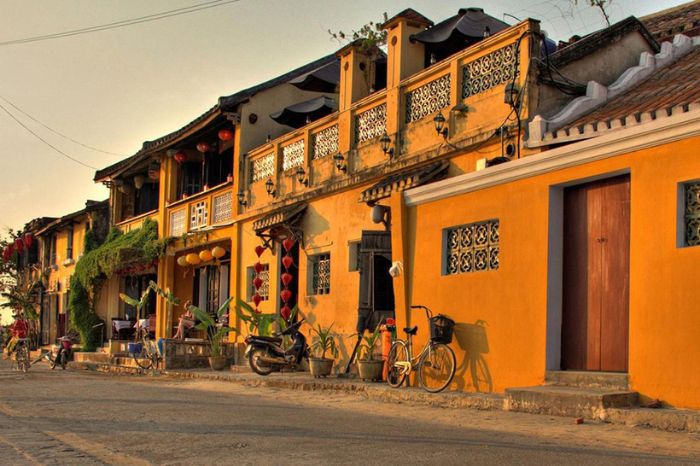
Ancient Town Hoi An originated in the 16th century as the bustling Faifo trading port. Merchants from Japan, China, and Portugal came here to trade silk and spices. Therefore, the architecture bears multicultural influences, with curved tiled roofs and characteristic yellow walls. In addition, the Thu Bon River contributed to promoting trade, turning Hoi An into an economic center in Central Vietnam.
Discover Ancient Town Hoi An
History also records Hoi An’s influence from the Nguyen Dynasty, with structures preserved intact. Thus, visitors today can feel the old atmosphere through every street. According to UNESCO documents, this place once welcomed thousands of ships annually, proving its important role in the maritime silk road.
1.2. Role in Various Historical Periods of Vietnam
During the resistance wars against France and America, Hoi An was a hiding place for many revolutionary soldiers. Ancient houses once concealed weapons and secret documents. Therefore, the heritage is not only architectural but also a symbol of national spirit. In addition, after 1975, local authorities made efforts to preserve it, turning Hoi An into a cultural tourism site.
According to data from Quang Nam Tourism Department, there are over 5 million visitors annually, contributing to local economic growth. Thus, exploring the history helps tourists understand more deeply the resilience of Vietnamese people. Tours combined with nearby Ngu Hanh Son will enrich your journey.
1.3. UNESCO Recognition and Global Significance
In 1999, UNESCO recognized Hoi An as a World Heritage site due to its unique architectural value. Criteria include the blend of Asian-European cultures, with over 1,000 preserved relics. Therefore, Hoi An becomes a symbol of sustainable tourism, attracting international visitors. In addition, it is evidence of cultural exchanges over centuries.
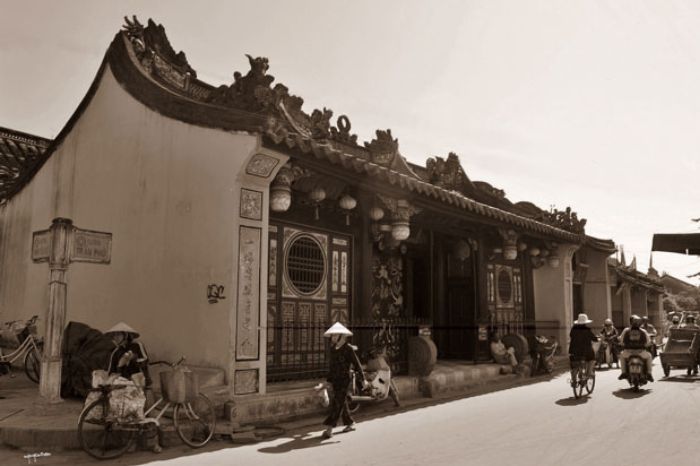
According to UNESCO reports, Hoi An has the highest preservation rate in Southeast Asia, with 80% of structures original. Thus, visiting is not only entertaining but also educational about human heritage. You can connect with other sites through the 4N3D tour from Da Nang to Hue.
2. Architecture and Notable Relics in Hoi An
2.1. Japanese Bridge – Historical Symbol
Japanese Bridge, also known as the Bridge Temple, was built in the 17th century by the Japanese community. The bridge is 18m long, with a curved roof shaped like a dragon, connecting the two banks of Hoai River. Therefore, it becomes the symbol of Hoi An, appearing in many travel photos. In addition, inside there is a shrine worshiping the Northern Emperor Tran Vu, carrying spiritual elements.
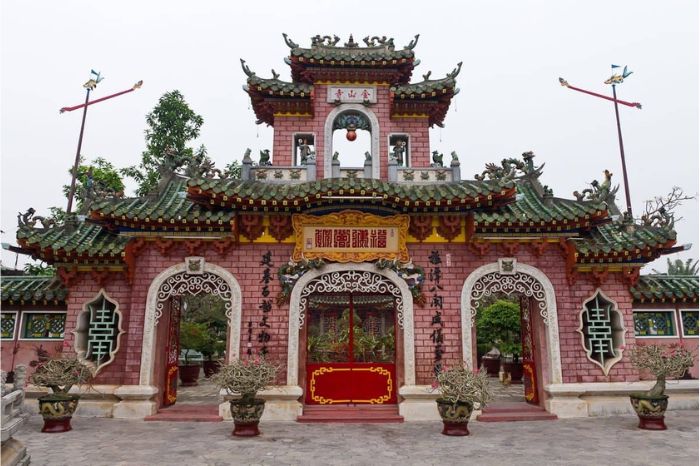
According to history, the bridge was renovated in 1817 under the Nguyen Dynasty, retaining the original design. Thus, visitors can take sunset photos here, feeling the mystery. Data from Hoi An Heritage Management Board shows over 10,000 daily visitors, proving its strong appeal.
Tours from Da Nang – Ngu Hanh Son – Hoi An often stop here for exploration. You will see exquisite wooden architecture, with intricate carved details.
2.2. Ancient Houses and Assembly Halls
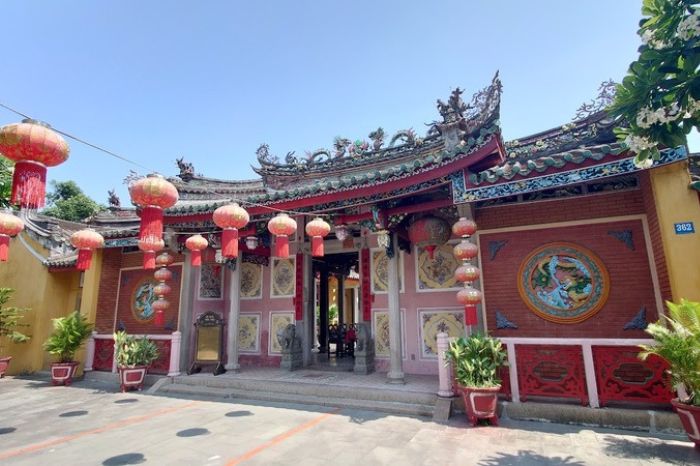
Hoi An has over 800 ancient houses, like Tan Ky House with 200 years of age. The house features lim wood columns, Bat Trang tiled floors, showing former wealth. Therefore, visiting helps you understand merchants’ lifestyle. In addition, Phuc Kien Assembly Hall with vibrant Chinese architecture, worshiping Thien Hau Holy Mother.
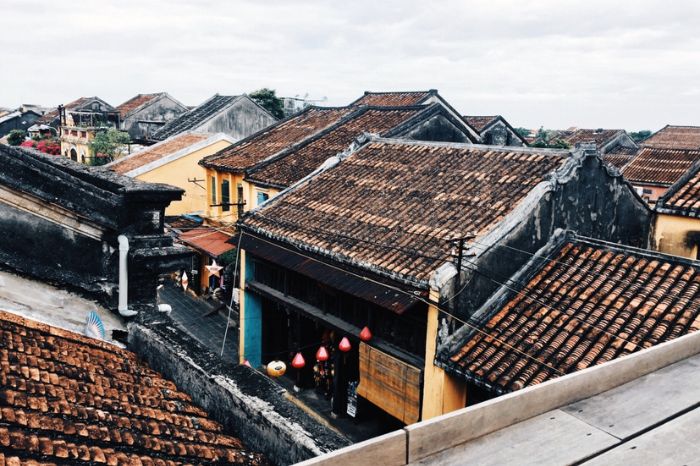
According to documents from Hoi An Museum, assembly halls were built from the 18th century, serving immigrant communities. Thus, they are places for festivals, preserving culture. Visitors can join guided tours to hear detailed stories.
Statistics show 70% of tourists choose visiting ancient houses as main activity. Combining with Ba Na Hills will add diversity to the journey.
2.3. Museums and Other Relics
Hoi An History Museum stores over 2,000 artifacts, from ceramics to ancient documents. Therefore, it is an ideal place for in-depth learning. In addition, Kim Bong carpentry village with hand-carved wood products, existing since the 15th century.
According to Quang Nam Culture Department reports, the museum welcomes 500,000 visitors/year. Thus, it provides a comprehensive view of history. Tourists should spend at least 2 hours to explore.
In the 4N3D tour, you can visit after returning from Hue, enriching the experience.
3. Culture and Unique Festivals of Hoi An
3.1. Local Cuisine and Specialties
Hoi An cuisine is famous for cao lau, Quang noodles, made from fresh local ingredients. Cao lau has chewy noodles, topped with pork and herbs. Therefore, it becomes a must-try dish. In addition, Phuong bread praised by CNN, with rich fillings.
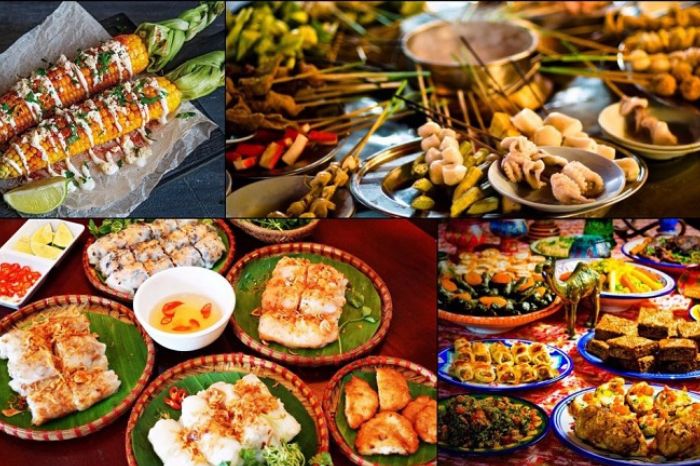
According to TripAdvisor surveys, 90% of tourists highly rate Hoi An food. Thus, joining cooking classes will be an interesting experience. Data shows cuisine revenue accounts for 40% of local tourism industry.
Combining with Ngu Hanh Son tour, you can enjoy after mountain climbing.
3.2. Lantern Festival and Cultural Events
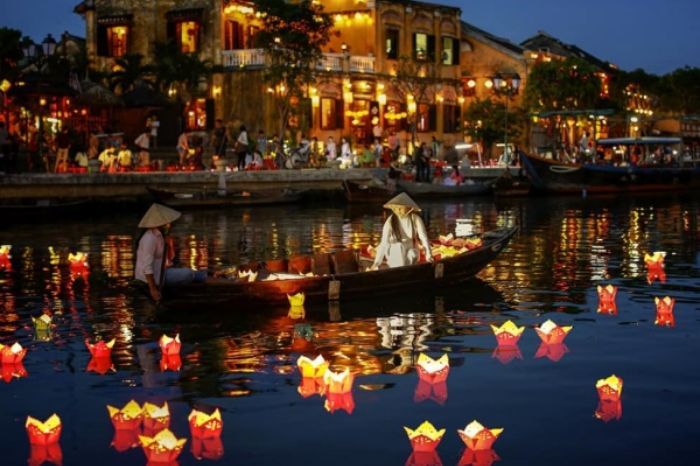
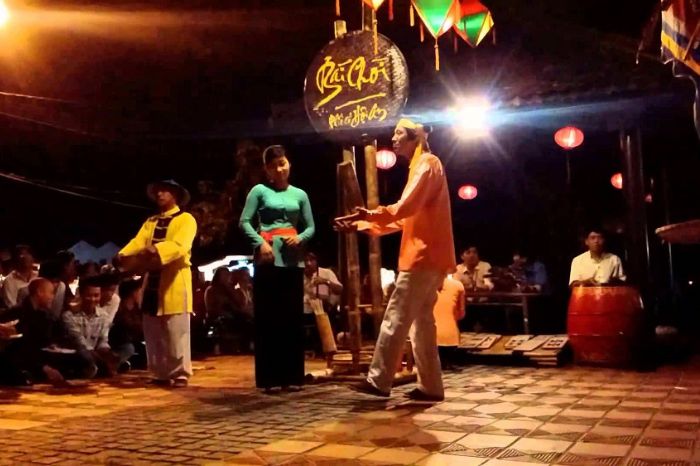
Lantern Festival takes place monthly on full moon days, with thousands of lanterns lighting up Hoai River. Therefore, the atmosphere is magical, attracting visitors. In addition, Hoi An Festival held annually, including folk art performances.
According to Festival Organizing Committee, the event attracted 1 million visitors in 2023. Thus, it contributes to cultural preservation. Tourists can release flower lanterns, praying for luck.
The 4N3D tour often schedules to coincide with festivals, increasing appeal.
3.3. Handicrafts and Traditional Craft Villages
Thanh Ha pottery village has existed for 500 years, producing daily utensils. Visitors can make pottery by hand. Therefore, this is a way to experience culture deeply. In addition, Tra Que vegetable village supplies clean greens, with cycling tours.
Data from Vietnam Craft Village Association shows Hoi An has 10 craft villages, employing 5,000 people. Thus, supporting craft villages is sustainable tourism.
In the journey from Da Nang to Hue, visiting craft villages will add meaning.
4. Visiting Guide and Suggested Tours
4.1. Transportation and Accommodation in Hoi An
From Da Nang, you can take a bus or rent a private car to Hoi An, 30km away. Therefore, travel time is only 45 minutes. In addition, ancient-style hotels like Anantara Hoi An Resort offer river-view rooms, priced from 3 million VND/night.
According to Booking.com, Hoi An has over 500 accommodations, with average rating 8.5/10. Thus, choose the old town area for convenient exploration. My Tam Travel supports safe car bookings.
4.2. Detailed 4N3D Tour Program
The Da Nang – Ngu Hanh Son – Hoi An – Ba Na – Hue 4N3D tour starts from Da Nang, visiting Ngu Hanh Son with mysterious caves. Day 2 explores Hoi An, including Japanese Bridge and cuisine. Therefore, the itinerary balances history and entertainment. In addition, day 3 goes to Ba Na Hills with the world’s longest cable car, at 1,487m height.
Final day to Hue, visiting the Imperial Citadel and Huong River. According to the schedule, total cost is about 5-7 million VND/person, including meals. Thus, suitable for families or couples. Data from My Tam Travel shows 95% satisfaction rate.
4.3. Tips for Optimal Experience
Wear comfortable clothes, bring sunscreen due to hot weather. Therefore, avoid peak hours for beautiful photos. In addition, try cycling around the old town for closeness. According to Lonely Planet guides, ideal season is February-April, with less rain.
Moreover, buy old town entry ticket for 120,000 VND to support preservation. Thus, responsible tourism will help Hoi An sustainable.
5. Sustainable Tourism Potential and Future
5.1. Heritage Preservation Projects
Quang Nam authorities invested 500 billion VND in old town preservation projects from 2020-2025. Therefore, structures are regularly repaired. In addition, “Green Hoi An” program encourages tourists to reduce single-use plastics.
According to UNESCO, Hoi An is a successful preservation model, with damage rate under 5%. Thus, the future will maintain its ancient beauty.
5.2. Integration with Nearby Tourist Sites
Hoi An easily connects to Da Nang via Dragon Bridge, 25km away. Therefore, tourists can combine with My Khe Beach. In addition, from Hue, tours extend to royal tombs.
Data from Vietnam National Tourism Administration shows Central region welcomed 20 million visitors in 2023. Thus, Hoi An is the center.
See more: Tourist Attractions in Vietnam to explore other destinations.
5.3. Economic Benefits from Hoi An Tourism
Tourism contributes 70% to Quang Nam’s GDP, creating jobs for 100,000 people. Therefore, it promotes local development. In addition, handicraft exports increase 15% annually.
According to World Bank, Hoi An’s community tourism model is exemplary. Thus, supporting locals through shopping contributes to sustainability.
6. Connection with Practical Activities
6.1. Hoi An Night Experience
Hoi An at night sparkles with lanterns, boat rides on Hoai River. Therefore, this is ideal time to relax. In addition, listen to Hue folk songs or performances.
Data shows 60% of tourists choose night activities. Thus, do not miss it.
6.2. Combination with Surrounding Nature
Visit Cu Lao Cham, 15km away, with clean beaches and diving. Therefore, add adventure elements. In addition, Bay Mau coconut forest for basket boat tours.
According to TripAdvisor, Cu Lao Cham has 4.5/5 rating. Thus, diversify the journey.
6.3. Shopping Guide and Souvenirs
Buy Hoi An silk or handmade lanterns at night market. Therefore, support local artisans. In addition, affordable prices from 100,000 VND.
Annually, souvenir revenue reaches 1,000 billion VND. Thus, shopping is an enjoyable part.
Ancient Town Hoi An is not only a heritage but also a place connecting past and present, offering profound cultural experiences for visitors. Through this article, we hope you have a comprehensive view of its history, architecture, and festivals. To make your journey perfect, contact My Tam Travel for free consultation and suitable tour bookings. We commit to high-quality services, helping you explore Vietnam safely and interestingly.
My Tam Travel car rental service is the number 1 reliable unit providing tourism vehicles for rent nationwide to serve visitors’ experiences. With modern fleet and professional drivers, we support all journeys from Da Nang to Hoi An and neighboring provinces.
CAR RENTAL IN DA NANG-HUE-HOIAN – WHATSAPP +84939790983
Specific contact information:
- Hotline: 0939790983
- Email: info@mytamtravel.com
- Fanpage: My Tam Travel
- TikTok: @mytamtravel
- YouTube: My Tam Travel Channel
- Website: https://mytamtravel.com
- Address: My Tam Travel Tourism and Trade Limited Company, Tax Code: 3401164258, Google map: https://g.co/kgs/zoCyeQE